"POLITICAL POETRY IS PASSE" -- I'VE HEARD IT SAID (Part 1)

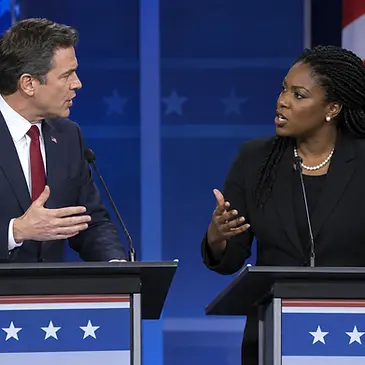
Each of the arts provides a powerful means of influencing opinion, both political and social, and action.
Therefore, concerning the above statement, I take strong exception.
As proposed in the following: “Protest helps close the gap between the promise of democracy and the formal structures we actually have,” political poetry also serves in the same way.
Music is perhaps more familiar than poetry as an art form used for political or social protest and influence.
Apparently, “As early as the 1st century BC, Roman texts reference “bards,” as esteemed members of Gaulish society. These figures were respected, learned musicians who used verse, music, and satire to share stories as well as songs of praise and mockery. They had immense power to sway public opinion — even for or against the ruling monarchs and chieftains — which caused fear among those in power and, after an intense persecution campaign, nearly caused them to be wiped out altogether by the 6th century AD. However, the tradition persisted and continued to be an important form of resistance during colonial times in later centuries."
One of my favorite movies of all time, set in Venice, is "Dangerous Beauty." (The score is a gorgeous one, by George Fenton!) The heroine is such a "bard"--a mischievous Renaissance "lady of the night" who is an awesome poet and engages in reparte and poetic competition to best her male colleague, much to his chagrin. Finding the only source of freedom for women in her sexual role, she becomes a symbol of spirited resistance and assertion of women's autonomy and creativity.
At least among adults age 50 and up, who can forget Joan Baez singing “We Shall Overcome,” or Barry McGuire’s “Eve of Destruction” or Bob Marley’s “Get Up, Stand Up” or Helen Ready’s “I am Woman, Hear Me Roar” ? (I still get up and dance to Leslie Gore's "You Don't Own Me".)
Words turned into poetic art can also be a potent source of political and social power, even if fewer readers these days are influenced, compared to many more listeners of music. Rome wasn’t built in a day and we all know where one poem—or one reader—can lead.
I call my poems that passionately promote basic feminist and humanist values, “rage” poems. With such poems I can:
--express my emotional responses and determination,
--discuss specific policy proposals or solutions to problems against which I rail, and
--build solidarity directly via my readers, especially those who respond to my values or "essential truth".
As the writer of the article mentioned above says about political protest, we poets via our publications, readings, and networking, also act to form “a collective consciousness of our democratic responsibilities.”
Witness poetry (called “poems of witness and remembrance” by poets.org) seems to be a fairly well-known branch of political poetry.
Carolyn Forche, a poet and professor at Georgetown University edited an awesome and perhaps "the" seminal 1993 anthology containing twentieth-century poetry of witness, Against Forgetting. The principal themes are war, exile, torture, prison, death, political repression by dictators, racism, and the Holocaust. Several sources say that the author “intended to collect the work of poets who had endured the impress of extremity during the 20th century, whether through their engagements or force of circumstance.”
Some take the position that personal suffering is not “poetry of witness.” Apparently, Fourche felt that these types of poems, ones mainly preoccupied with the personal, do not occur within a space of political resistance and struggle; see this analysis.
However, being squarely rooted in the Second Wave of Feminism, I am convinced that our motto during those times of the 60s is correct: the personal IS political!
So far in perusing Fourche’s amazing 762-page collection of poems, I've found only a few poems that deal overtly with the oppression of women, or lament minimal rights and roles for women other than "earth mother" or "brood mare" (as Dr. Margaret Sanger called women before she introduced contraception into the US).
I don't find direct mention of society and patriarchal men treating women as "other" rather than as human beings, or mention of how women are particularly abused in war, domestic situations, or in their historically limited roles. I have not found references to inequitable opportunities and incomes in private and public life, including lack of autonomy in making decisions regarding their bodies, reproductive matters, family formations, and in other aspects of women’s lives.
I was disappointed--considering the wide social recognition of women’s liberation from the 60s onward--to find that in 1993, Forche included in her collection, only 14 women poets, about ten percent of the total number.
For certain, my rage poems deal with personal suffering and document the suffering of women in a patriarchal and misogynist country. I find them difficult to write because my feelings around the injustice to, and sadness for, women suffering are so powerfully negative.
When I first decided in April of 2025 to go on the journey of submitting my poetry for publication by online and print literary journals, I was alerted by my poetry coach, Alyse Knorr, that in view of the current political regime, a number of more traditional journals might shy away from embracing political themes. I found her advisory to be true, although I can't be sure of the exact reasons for which any rejection by an editor is issued.
I did find one well-respected and highly reputed poetry journal, Rattle, that features a quick-response/quick-publication initiative regarding poetry about current events. However, their selection process results in an extremely low acceptance rate. As a relatively new poet that renders my chances for publication to be very low. This past year on several occasions I submitted timely poems to this journal, but to avoid discouragement I have set some aspirational limits regarding this fine journal for the time being while I hone my poetry crafting skills.
I set about seeking other journals with editors who show the substantial courage of their convictions and align with my feminist and humanist values, and thus, who publish political poetry. I identified two primary ones, Dissent Voice , co-editors Faramarz Farbod and Kim Peterson, and Second Coming, editor Michael Broder. Their editors have kindly and repeatedly encouraged me by accepting more than only one or two of my poems.
Dissent Voice published my first-ever pro-choice/pro-abortion-related poem, “Who Merits the Shame”, my first pro-choice pro-abortion poem, and Second Coming published a favorite among my humorous "rage" poems, “My Morning" (set forth below). The latter light verse poem still makes me laugh when I read the final punch line. I'm one who finds that humor in poetry and life helps keep me sane during these dire, anti-humanist, anti-feminist political times.
Editors of both journals have graciously agreed to answer questions about the inspiration for their publication focus and how their journey has gone. I’ll address those questions in my next two blogs. I hope you visit their awesome websites and read other poems they have published, set forth on my "Poems" page in this website.
Please let your poetic friends know that these journals welcome passionate political poetry. That is a small way to support admirable endeavors shepherded by editors who also believe that even "raging" poetry can make a positive difference in our social and political lives.
Thanks for visiting, and reading my first blog!
My Morning

I frazzled the bacon
and frizzled my hair
so early it was
I just didn’t care.
How early you ask?
Just a quarter past three
that I thought my clock said
when I’d crawled out of bed.
Insomnia’s hell! rang in my head
as my feet touched the ground
with fog all around.
This situation’s the pits
I said to my cat
who placidly sat
observing my spat
with the cord of my phone
like a tight ball of yarn
strangling my glasses
in a death grip forlorn.
They wrestled around
on the floor by my bed
but I sidestepped them both
to head to the head
being a lady indeed
but of certain age—
some things just can’t wait
(especially of late).
I splashed water on my face
then proceeded downstairs
to scramble an egg
with some salsa I found.
That plus grated cheese
I left simmering and warm
while I headed for the best
part of my morn:
rocket fuel in a cup.
With Nespresso in play
and dark nectar to sip
I sat down at the table
with my scrambled mess,
black Quijote to my side
and my kitty—doubly blest.
I opened a book
face down on the table,
to face a grim day
far worse than a fable
as Anderson might write
at the height of his fame:
How Fascism Works:
The Politics of Us and Them
Thus rudely awakened
into early morn’s slow lament,
I took up the urgent task
to overthrow the government.
###
Image at the top was composed by AI--the only concession I will
ever make to this technology..
Comments